1. 서론: 흔들리는 동맹, 냉정한 손익계산서의 시대
미국과 이란의 군사적 대치가 반년을 넘기며 장기화되자, 트럼프 행정부 특유의 '거래적 외교관'이 다시 한번 국제 무대를 뒤흔들고 있습니다. 동맹을 가치와 신뢰가 아닌 철저한 비용과 손익의 관점으로 다루는 기조가 노골화되면서, 유럽과 중동은 물론 한반도 안보 환경까지 거센 소용돌이에 휘말렸습니다.
특히 8월 17일 시작된 한미 정례 연합연습인 '을지 자유의 방패(UFS)'를 기습적으로 대폭 축소하라는 지시는 한국 사회에 커다란 충격을 주었습니다. 이란전 지원 문제와 방위비 분담금 인상 압박, 그리고 북한과의 독자 대화 추진이 복잡하게 얽히며 동맹의 기본 틀이 시험대에 올랐습니다. 오늘 이데아(IDEA)는 안보를 협상의 지렛대로 삼는 미국의 전방위적 압박 전략과 이에 맞선 우리의 생존 방정식을 I(Issue) - D(Detail) - E(Evaluation) - A(Action) 프레임워크로 짚어봅니다.
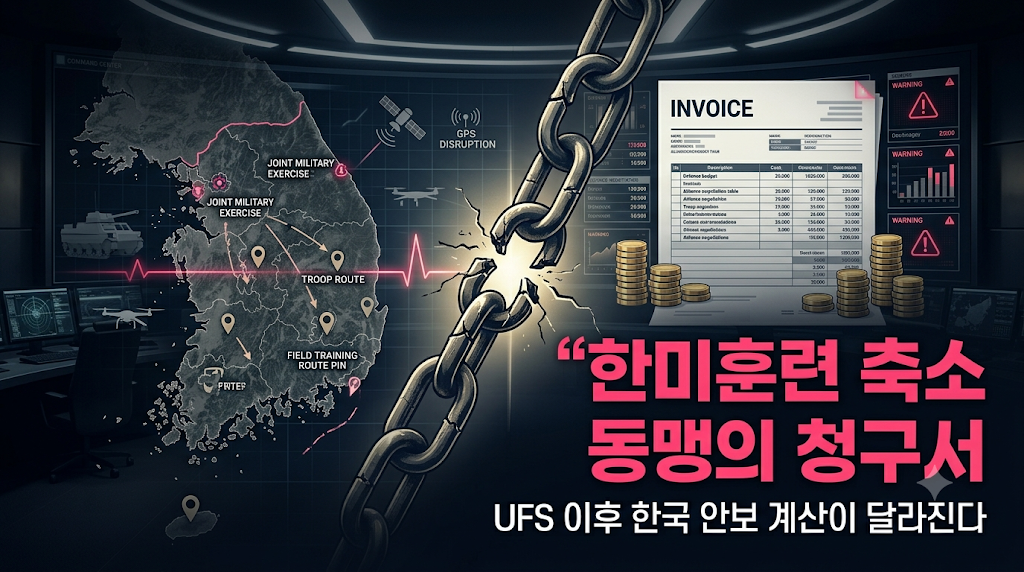
2. [ I ] Issue : 시험대에 오른 동맹, 전방위로 번지는 압박
트럼프 행정부에게 이란 사태는 각국의 군사적 협조 의지와 방위비 분담 능력을 재는 기준점으로 작동하고 있습니다. 미국의 요구에 선뜻 응하지 못한 동맹국들을 향해 외교와 통상을 넘나드는 강한 압박이 쏟아지고 있습니다.
모든 외교 사안을 비즈니스 계약처럼 다루는 기조 속에서, 군사적 기여나 안보 협조가 부족하다는 이유로 관세 인상과 같은 경제적 압박 카드가 함께 동원되고 있습니다.
독일 주둔 미군 5,000명 감축, EU산 자동차·트럭 관세 25% 인상, 스페인·이탈리아 등 일부 유럽 동맹국에 대한 추가 병력 감축 가능성 언급이 이어지며, 미국의 동맹 압박이 안보와 통상 영역을 동시에 흔들고 있습니다.
한국의 이란전 지원 불참 문제와 훈련 비용, 북한 지도부와의 관계를 언급하며 UFS 축소를 지시했고, 한국군 약 1만 8천 명이 참가하는 연합훈련은 조기 종료와 일부 야외기동훈련 축소 방향으로 조정됐습니다.
3. [ D ] Detail : 글로벌 압박 사례와 한국을 향한 복합 청구서
1) 유럽과 중동을 뒤흔든 미국의 동맹 압박 양상
- 독일 & EU: 독일 주둔 미군 약 5,000명 감축 방침이 발표됐고, EU산 자동차·트럭 관세를 25%로 올리겠다는 발표도 나왔습니다. 일부 분석에 따르면 기존 기본 관세를 감안할 때 실질적으로 27.5% 수준에 달하는 부담이 생깁니다.
- 스페인: 유럽 내 미군 병력 감축 가능성과 함께 미군 기지 사용 및 이란전 협조 문제를 둘러싼 미국의 불만이 공개적으로 거론되었습니다.
- 오만: 호르무즈 해협의 항행 재개 및 이란과의 중재 협상 과정에서 오만을 향한 미국의 강도 높은 군사적 경고 발언이 보도되었습니다.
2) 한국을 향한 3중 청구서: 규모 과장, 방위비 증액, 독자 대화
방위비 분담 문제에서 한국은 다시 압박의 전면에 섰습니다. 첫째, 실제 주한미군 규모는 약 2만 8,500명으로 알려져 있지만, 발언 과정에서는 3만 9천 명이라는 부풀려진 수치가 언급되며 한국의 부담을 키워야 한다는 프레임이 만들어졌습니다. 둘째, 한국에 연 100억 달러 수준의 방위비 부담을 요구했다는 보도가 나왔고, 이는 현행 방위비분담특별협정(SMA) 수준과 큰 차이가 있습니다. 셋째, UFS 축소 지시 과정에서 북한 지도자와의 관계가 함께 언급되면서, 한국 입장에서는 안보 협의의 예측 가능성이 낮아졌다는 부담이 커졌습니다.
3) '을지 자유의 방패(UFS)' 축소의 현실적 파장
올해 UFS는 드론, GPS 교란, 사이버 공격 등 최근 전쟁 양상을 반영한 훈련으로 설명됐습니다. 그러나 미국 측 축소 지시 이후 일부 야외기동훈련(FTX)은 축소되거나 한국 단독 훈련 또는 연내 연기 방식으로 조정될 가능성이 논의됐습니다. 이 조치는 곧바로 동맹 붕괴를 뜻하지는 않지만, 연합 대비태세와 대북 억제 신뢰에 부담을 줄 수 있다는 우려를 남깁니다.
4. [ E ] Evaluation : 변모하는 동맹관과 우리가 마주한 현실
미국의 강한 압박은 단기적인 양보를 이끌어낼 수 있을지 모르지만, 장기적으로는 수십 년간 쌓아온 신뢰의 자산을 갉아먹는 자충수가 될 수 있다는 지적이 잇따르고 있습니다.
| 주요 점검 분야 | 미국 측의 접근 방식 | 이데아(IDEA)의 실질 평가 |
|---|---|---|
| 연합 군사훈련 (UFS) | 훈련 비용 부담과 북한과의 대화 여건 조성을 이유로 기습적인 축소 지시. | 훈련 기간 단축과 일부 FTX 축소는 연합 작전 숙달도와 대북 억제 신뢰에 부담을 줄 수 있습니다. 다만 이는 즉각적인 억제력 붕괴라기보다 대비태세 약화 우려로 보는 것이 더 정확합니다. |
| 미국 내부의 정치 지형 | 백악관 주도의 일방적인 군사훈련 조정 및 동맹 가치 재산정. | 앤디 김, 마크 켈리 등 미 의회 주요 인사들과 국방 관료들의 강한 우려 표명. 미국 내에서도 동맹 정책을 둘러싼 초당적 이견과 논쟁이 심화되는 양상. |
| 국제 안보 네트워크 | 안보 공약을 협상 카드로 활용하며 통상 압박 병행. | 나토와 인도태평양 동맹국에 미국 안보 공약의 지속성에 대한 의문을 남길 수 있습니다. 일부 논평에서는 이런 흐름이 한국·일본의 독자 안보 선택지 논의를 자극할 수 있다고 보지만, 핵무장 도미노는 확정적 결과가 아니라 강한 우려와 전망의 영역입니다. |
이러한 흐름은 과거 냉전식의 무조건적인 안보 우산에만 기댈 수 없음을 보여줍니다. 위기 상황에서 각자의 국익이 충돌할 때 동맹의 약속이 언제든 재조정될 수 있다는 냉엄한 현실을 직시해야 합니다.
5. [ A ] Action : 안보 불확실성 시대를 돌파하기 위한 실천 전략
미국발 리스크를 완화하고 국방 자립도를 높일 Action Plan
- 자주국방 역량의 실질적 고도화: 연합 자산의 운용 환경이 언제든 변할 수 있음을 확인한 만큼, 한국군 중심의 독자적인 작전 기획 및 감시·정찰 능력을 단계적으로 확충해야 합니다. 드론과 사이버전 등 현대 비대칭 위협에 대응하는 단독 훈련 체계를 더욱 탄탄히 보강해야 합니다.
- 미 의회 및 주 정부를 아우르는 입체적 외교 네트워크: 백악관의 일방적 결정을 완충하기 위해 미국 상·하원 의원, 직업 외교·안보 관료, 한국 기업의 대규모 투자가 진행 중인 미국 현지 주 정부들과의 접점을 대폭 넓혀야 합니다. 한국의 기여가 미국의 일자리와 산업 안보에 직결된다는 점을 설득해 든든한 우군을 확보해야 합니다.
- 유사 입장국과의 다자 안보·외교 협력 확대: 미국의 정책 변동성으로 고민하는 유럽의 주요 파트너들(독일 등) 및 아시아·태평양 지역의 우방국(호주, 일본 등)과 전략적 대화 채널을 넓혀야 합니다. 양자 동맹의 한계를 보완할 수 있는 유연한 다자간 안보 협력망을 구축해 외교적 선택지를 넓혀야 합니다.
6. 최종 결론: 흔들리는 동맹의 파도 속에서 중심을 잡을 때
2026년 미·이란 전쟁의 여파 속에서 불거진 UFS 연합훈련 축소 논란과 방위비 증액 요구는 단순한 해프닝이 아닙니다. 이는 국제 정세의 거센 격변 속에서 국가 간의 안보 연대가 얼마나 쉽게 거래의 대상으로 전환될 수 있는지를 보여주는 뼈아픈 장면입니다.
한국의 이란전 지원 불참을 두고 미국 측 불만이 공개적으로 드러났고, 동시에 북한 지도자와의 관계를 이유로 UFS 축소가 언급되면서 한국은 동맹의 안정성을 다시 계산해야 하는 상황에 놓였습니다. 이 갈등은 우리에게 큰 부담이지만, 한편으로는 맹목적인 안보 의존에서 벗어나 스스로를 지킬 수 있는 힘과 외교적 자율성을 키우는 결정적 계기가 되어야 합니다. 정부는 감정적인 대응이나 막연한 기대 대신, 철저한 실리 중심의 외교와 빈틈없는 자주국방 로드맵을 바탕으로 차분하게 국익을 지켜내야 합니다.
1. Introduction: Shaking Alliances in an Era of Cold Balance Sheets
As the military standoff between the United States and Iran surpasses the half-year mark, the Trump administration's characteristic 'transactional diplomacy' is once again rattling the international stage. With alliances being treated through the lens of strict costs and balance sheets rather than shared values and trust, severe turbulence has spread across Europe, the Middle East, and the Korean Peninsula.
In particular, the abrupt directive to drastically scale back the 'Ulchi Freedom Shield (UFS)' annual joint exercise, which began on August 17, has sent shockwaves through South Korea. Complex intertwinings of non-participation in Iran operations, pressure for increased defense cost-sharing, and independent outreach to North Korea have put the very foundation of the alliance to the test. Today, IDEA dissects the US's multi-layered pressure strategy and our survival calculus using the I (Issue) - D (Detail) - E (Evaluation) - A (Action) framework.
2. [ I ] Issue: Alliances Put to the Test, Pressure Spreading on All Fronts
For the Trump administration, the Iran crisis has functioned as a benchmark evaluating allies' willingness to contribute and their capacity to share defense costs. Strong pressure across diplomatic and trade domains is mounting against allies unable to readily comply.
Treating foreign policy like business contracts, economic tools such as tariff hikes are being mobilized alongside complaints regarding insufficient military contributions.
With plans to cut 5,000 troops in Germany, a 25% tariff hike on EU automotive imports, and mentions of potential troop reductions in Spain and Italy, US pressure is simultaneously shaking security and commerce.
Citing non-participation in supporting the Iran war, exercise costs, and relations with North Korea's leadership, UFS was directed to be scaled down, adjusting the ~18,000 troop drill toward early completion and partial FTX reduction.
3. [ D ] Detail: Global Pressure Patterns and the Multi-layered Invoices on Korea
1) Forms of US Pressure Across Europe and the Middle East
- Germany & EU: A plan to reduce US troops in Germany by 5,000 was announced, alongside a 25% tariff hike on EU cars and trucks. Analysts note that factoring in baseline tariffs, this represents a practical burden of roughly 27.5%.
- Spain: Dissatisfaction regarding base usage and Iran cooperation was publicly raised, accompanied by mentions of potential US troop reductions across Europe.
- Oman: High-level US warnings were reported during negotiations concerning navigation in the Strait of Hormuz and diplomatic mediation with Iran.
2) Triple Invoices on Korea: Inflated Numbers, Cost Hikes, Lower Predictability
South Korea is once again at the center of defense burden-sharing pressure. First, while the actual USFK troop level is around 28,500, public remarks mentioned an inflated figure of 39,000, framing a narrative for higher Korean contributions. Second, reports surfaced demanding annual defense contributions near $10 billion, a stark departure from the current SMA framework. Third, mentioning relations with North Korea's leadership during the UFS scale-back directive has increased the burden of reduced predictability in bilateral security consultations.
3) Practical Fallout from Scaling Down 'Ulchi Freedom Shield'
This year's UFS was designed to address modern warfare scenarios including drones, GPS jamming, and cyber warfare. Following scale-back directives, discussions emerged to adjust field training exercises (FTX) through partial reductions, independent ROK drills, or scheduling postponements. While this does not signify an immediate alliance collapse, it leaves lingering concerns regarding joint readiness and deterrence credibility.
4. [ E ] Evaluation: Shifting Alliance Paradigms and Our Reality
While aggressive US pressure may yield short-term concessions, growing criticism suggests it risks eroding the strategic trust built over decades.
| Key Area | US Approach | IDEA's Practical Assessment |
|---|---|---|
| Combined Exercises (UFS) | Surprise directive to scale back citing cost burdens and diplomatic room with North Korea. | Shortened timelines and FTX reductions can burden combined operational proficiency. However, it is more accurately viewed as a readiness concern rather than an immediate collapse of deterrence. |
| US Domestic Politics | White House-led unilateral adjustments of exercises and re-evaluation of alliances. | Bipartisan pushback and deep concerns expressed by US lawmakers (Sen. Andy Kim, Mark Kelly) and defense officials. Highlights deepening domestic debate over the future of US alliance policy. |
| International Security Network | Using security commitments as leverage alongside trade pressure. | Raises questions among NATO and Indo-Pacific partners regarding long-term commitment. While some commentaries suggest this could stimulate autonomy debates in Korea and Japan, a nuclear domino remains an area of strong concern rather than a predetermined outcome. |
These developments demonstrate that reliance solely on traditional security umbrellas is no longer sufficient. We must face the sober reality that alliance commitments can be recalibrated when national interests diverge during crises.
5. [ A ] Action: Practical Strategies for an Era of Security Uncertainty
Action Plan to Mitigate US Risk and Enhance Defense Self-Reliance
- Substantive Enhancement of Independent Defense Capabilities: Recognizing that combined asset operations can fluctuate, South Korea must systematically expand its own operational planning, intelligence, surveillance, and reconnaissance assets. Independent training systems addressing modern asymmetric threats like drones and cyber warfare must be reinforced.
- Multi-layered Diplomatic Outreach to the US Congress and States: To buffer against unilateral executive moves, outreach must expand across the US Senate, House, professional foreign policy officials, and state governments benefiting from Korean investments. Emphasizing that Korean partnerships directly support US jobs and supply chains provides critical counter-leverage.
- Broadening Minilateral Security Cooperation: Strategic dialogue should be broadened with key European partners facing policy volatility (e.g., Germany) as well as Indo-Pacific partners (Australia, Japan). Building flexible minilateral frameworks helps compensate for bilateral vulnerabilities and widens strategic choices.
6. Final Conclusion: Holding the Course Amid Shifting Alliance Tides
The controversy surrounding the scale-back of UFS drills and elevated defense burden demands during the 2026 US-Iran conflict is not a passing friction. It is a sobering illustration of how rapidly security partnerships can shift toward transactional bargains amidst geopolitical turbulence.
With public dissatisfaction expressed over non-participation in Iran operations and relations with North Korea cited alongside exercise adjustments, South Korea must recalculate the stability parameters of the alliance. While challenging, this turning point must serve as a catalyst to foster greater self-reliant defense capabilities and broader diplomatic agility. Rather than relying on emotional reactions or passive expectations, our focus must remain squarely on pragmatic diplomacy and a steadfast roadmap for national self-reliance.
[이데아 심층 분석] 무디스(Moody's)의 3.5% 서프라이즈: 반도체 호황 이면의 1,400원대 환율 딜레마 /
1. 서론: 무디스의 3.5%, 반가웠지만 마음이 마냥 가볍지는 않았다지금 우리는 2026년 8월 19일 오전 8시를 지나고 있다.8월 18일, 무디스(Moody's)가 한국의 2026년 경제성장률 전망치를 2.5%에서 3.5%로 올
www.ideas6926.cloud
[이데아 심층 분석] 유리천장을 깨는 거부: 그래미 '아시안 팝' 신설과 방탄소년단(BTS)의 권력 이
1. 서론: 대중음악 권력의 이동과 제도적 한계 노출지금 우리는 2026년 8월 17일 오전을 지나고 있다.서구 대중음악 산업의 가장 보수적인 상징 중 하나인 그래미 어워드(Grammy Awards)가 새로운 논쟁
www.ideas6926.cloud


