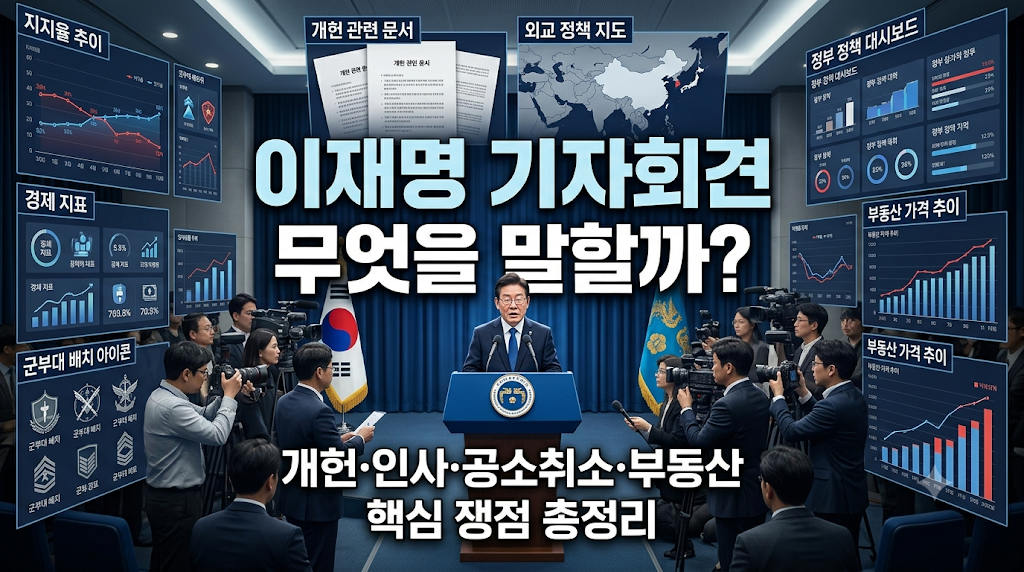
이재명 대통령 기자회견, 무엇을 말하고 어디까지 선을 그을까? President Lee Jae-myung’s Press Conference: What Will He Address, and Where Will He Draw the Line?
민생·개혁·국민통합부터 공소취소, 개헌, 인사, 호르무즈 파병과 부동산 정책까지 사전 전망
작성 시점 안내
이 글은 기자회견 시작 전에 공개된 일정과 청와대 설명, 주요 현안 보도를 토대로 작성한 사전 분석이다. 공식적으로 확인된 사실과 IDEA의 전망을 분리했으며 실제 대통령 발언과 정책 결정은 회견 이후 달라질 수 있다.
이번 기자회견은 단순한 소통 행보인가, 아니면 이재명 정부가 국정 운영 방식을 조정하는 분기점인가?
FACT CHECK|현재까지 공식적으로 확인된 내용
2026년 9월 18일 오전 10시로 예정됐던 기자회견은 오전 10시 30분으로 30분 연기됐다. 청와대 관계자는 대통령이 이번 회견에 책임감을 갖고 있으며, 국민에게 직접 할 말을 마지막까지 구체적으로 가다듬고 있다고 설명했다.
기자회견은 대통령의 여는 말, 기자 질의응답, 마무리 발언을 포함해 약 90분 동안 진행될 예정이다. 질의응답은 정치·외교와 정책·경제 분야로 나뉘며 내외신 기자 약 150명이 참석하는 것으로 안내됐다.
청와대가 밝힌 회견의 핵심 기조는 개혁, 민생, 국민통합이다. 회견장에는 ‘국민의 뜻, 국민의 삶, 더 살피겠습니다’라는 문구가 사용되며 기자들이 특정 주제에 제한받지 않고 질문하는 방식과 실시간 국민 댓글 소개가 예정돼 있다.
공소취소 논란, 연임 개헌, 인사 검증, 호르무즈 해협 파병, 대미 투자, 부동산 공급과 세제 방향 등이 주요 질문 후보로 보도됐다. 다만 이는 공개 보도를 바탕으로 한 예상 의제이며 청와대가 질문이나 답변 내용을 공식 확정해 발표한 것은 아니다.
여기까지가 공식 자료로 확인되는 사실이다.
DETAIL|왜 지금 기자회견을 여는가
이번 회견에는 취임 100일이나 신년 회견처럼 누구나 이해할 수 있는 기념일의 명분이 붙어 있지 않다. 회견 제목도 별도의 수식 없이 단순하게 정해졌다. 이런 구성은 이번 행사의 무게중심이 성과 홍보보다 현재 쌓여 있는 질문에 대통령이 직접 답하는 것에 놓여 있음을 보여준다.
정치 분야에서는 공소취소와 개헌, 최근의 인사 검증 논란과 여권 내부 갈등이 질문 후보로 꼽힌다. 외교·안보에서는 호르무즈 해협 파병과 대미 투자 문제가, 정책·경제 분야에서는 부동산 공급과 세제 방향이 거론된다.
서로 떨어져 있는 현안처럼 보이지만 이 사안들은 결국 하나의 질문으로 모인다. 정부는 어떤 기준으로 결정을 내리며 대통령은 그 결과에 어디까지 책임을 질 것인가.
이번 회견에서 구분해 들어야 할 세 가지
첫째는 대통령이 밝히는 원칙이다. 둘째는 정부가 실제로 취할 결정이다. 셋째는 그 결정이 실행되는 시점과 절차다. 원칙만 있고 결정이 없거나, 결정은 있지만 일정과 절차가 없다면 회견 이후 불확실성은 그대로 남을 수 있다.
예상 발언 지도|어떤 답변이 나올 가능성이 큰가
민생을 국정 운영의 최종 기준으로 재확인
여는 말에서는 민생과 국민 체감이 먼저 등장할 가능성이 크다. 다만 전면적인 정책 폐기나 국정 기조 전환보다는 정책 집행의 속도와 전달 방식, 현장에서 느끼는 효과를 다시 살피겠다는 설명에 가까울 것으로 보인다.
‘국민의 삶을 더 살피겠다’는 공식 문구도 기존 정책을 모두 뒤집는다는 뜻보다 정책 성과가 실제 생활에서 체감되는지 점검하겠다는 메시지로 읽힌다.
인사 논란에는 유감 표명과 검증 보완
대통령이 최근 인사 결과에 대한 책임을 어느 정도 인정하는지가 회견 분위기를 좌우할 수 있다. 개별 후보자의 거취를 모두 현장에서 확정하기보다는 검증 과정의 부족함을 인정하고 국민 눈높이를 기준으로 다시 판단하겠다는 답변이 나올 가능성이 있다.
관건은 “검증을 강화하겠다”는 익숙한 설명을 넘어 실제 판단 기준을 밝히는가다. 위법 여부만 볼 것인지, 이해충돌과 공직 윤리, 국민 신뢰까지 고려할 것인지에 따라 같은 유감 표명도 다르게 받아들여질 수 있다.
공소취소 논란에는 개인과 국가 시스템의 분리
공소취소 문제는 대통령 개인의 이해관계와 국가 권한의 경계가 맞닿아 있다는 점에서 가장 민감한 질문 중 하나다. 대통령은 개인 사건을 위해 행정부의 권한이나 국가 시스템을 이용하지 않겠다는 원칙을 강조할 가능성이 크다.
진행 중인 사법 절차를 이유로 구체적인 법률 판단은 피할 수도 있다. 이 경우 답변의 길이보다 개인적 이해와 대통령 권한을 분리하겠다고 얼마나 명확하게 밝히는지가 평가 기준이 된다.
연임 개헌에는 현직 대통령 적용 가능성과 거리 두기
권력구조 개편이나 개헌 논의 자체는 열어두면서도 현직 대통령의 임기를 늘리거나 연임을 가능하게 하기 위한 개헌은 아니라는 점을 강조할 가능성이 있다.
개헌은 국회와 국민이 결정할 사안이며 당장 민생보다 앞설 수 없다는 답변도 예상할 수 있다. 다만 현직 대통령에게 개정 헌법을 적용하는 문제에 관한 실제 입장은 회견 발언을 통해 확인해야 한다.
호르무즈 파병에는 결론보다 결정 조건 제시
외교·안보 분야에서는 파병 찬반을 즉시 확정하기보다 한국 국민과 선박의 안전, 국제법적 근거, 국회와의 협의, 파병 목적과 임무 범위를 함께 검토해야 한다는 답변이 나올 가능성이 있다.
동맹 협력과 중동 외교, 교역로 보호와 파병 위험이 동시에 얽힌 사안인 만큼 파병 여부만이 아니라 임무의 범위와 종료 조건도 함께 살펴야 한다.
부동산에는 공급 확대와 시장 안정의 병행
부동산 문제에서는 실수요자를 위한 공급을 늘리되 투기 수요를 자극하는 방식은 피하겠다는 방향이 제시될 가능성이 있다. 세제 문제는 구체적인 인상이나 인하를 확정하기보다 주거비 부담과 시장 흐름을 함께 살피겠다는 답변에 머물 수 있다.
공급 확대라는 표현만으로 정책 변화를 판단해서는 안 된다. 실제 부지와 인허가, 재원, 착공 시점이 제시돼야 구체적인 공급 계획으로 평가할 수 있다.
ANALYSIS|회견을 읽는 네 가지 프레임
분석 1. 이번 회견의 목적은 정책 발표보다 신뢰 회복에 가깝다
이번 기자회견은 특정 정책을 홍보하기 위해 마련된 자리가 아니다. 여러 현안이 동시에 대통령의 설명을 요구하는 상황에서 국정 운영의 기준을 다시 제시하려는 성격이 더 강하다.
새로운 정책을 많이 발표하면 당장의 관심은 끌 수 있다. 그러나 인사와 사법 논란에 대한 답이 빠진다면 핵심 질문을 피했다는 평가가 나올 수 있다.
IDEA 판단: 회견의 성패는 발표한 정책의 개수가 아니라 대통령이 자신의 책임과 권한의 한계를 얼마나 구체적으로 설명하는지에 달려 있다.
분석 2. 명확한 답변은 대통령에게도 정치적 비용을 요구한다
공소취소와 개헌 문제에 분명한 선을 그으면 제도 안정성을 중시하는 유권자에게는 신뢰 회복의 계기가 될 수 있다. 반면 여권 내부에서 다른 기대를 가진 세력에는 선택지를 제한하는 메시지가 된다.
인사 문제도 마찬가지다. 후보자 거취를 재검토하면 검증 실패를 인정하는 모습이 되지만 논란을 조기에 정리할 수 있다. 임명을 강행하면 정책 추진의 연속성은 유지할 수 있으나 여론을 충분히 듣지 않는다는 비판이 이어질 수 있다.
IDEA 판단: 대통령이 어느 정치적 비용을 감수하고 어떤 원칙을 선택하는지가 회견의 실질적인 메시지가 된다.
분석 3. 국정 쇄신은 발언보다 후속 결정에서 확인된다
기자회견은 정책 집행 자체가 아니다. 대통령이 인사 검증 개선, 부동산 공급 확대, 외교·안보 원칙을 밝히더라도 실제 변화는 후속 인사와 부처 계획, 국회 협의 과정에서 확인된다.
부동산 공급에는 부지와 인허가, 재원과 착공 일정이 뒤따라야 한다. 파병에는 목적과 임무 범위, 법적 절차가 제시돼야 한다. 인사 쇄신도 검증 기준과 임명 결과가 달라지지 않는다면 선언에 머문다.
IDEA 판단: 회견 직후의 말보다 앞으로 이어질 인사 결정과 관계 부처의 후속 계획이 오늘 메시지의 진정성을 판별한다.
분석 4. 시장이 원하는 것은 강한 표현보다 예측 가능한 기준이다
부동산과 대미 투자, 호르무즈 파병은 서로 다른 분야지만 시장이 던지는 질문은 비슷하다. 정부가 어떤 조건에서 개입하고, 어느 시점에 결정을 내리며, 기존 정책을 어떤 기준으로 수정하는지 알고 싶어 한다.
단호한 표현은 짧은 반응을 만들 수 있지만 조건과 일정이 빠지면 불확실성은 줄어들지 않는다.
IDEA 판단: 경제와 외교·안보 분야에서는 결론의 강도보다 결정 조건과 후속 일정의 구체성이 정책 신뢰를 좌우할 가능성이 크다.
COUNTER VIEW|이 분석이 틀릴 수 있는 이유
예상보다 강한 쇄신안이 나올 수 있다
회견 시간이 30분 연기된 배경에 관해 청와대는 대통령이 국민에게 직접 할 말을 구체적으로 가다듬고 있다고 설명했다. 이 설명만으로 새로운 인사 결정이나 정책 발표가 추가됐다고 판단할 수는 없다. 다만 실제 회견에서는 특정 후보자의 거취나 국정 쇄신 조치가 예상보다 구체적으로 제시될 가능성이 남아 있다.
자유 질의가 회견의 중심을 바꿀 수 있다
기자들이 특정 주제에 제한받지 않고 질문하는 방식에서는 질문 순서와 후속 질문에 따라 한 가지 사안이 회견 전체를 압도할 수 있다. 공소취소나 개헌 문제에서 예상 밖의 답변이 나오면 민생과 경제 메시지는 상대적으로 묻힐 수 있다.
사전 전망에 사용할 수 있는 자료가 제한적이다
현재 확인된 것은 회견 일정과 형식, 공식 기조, 언론이 예상한 질문 범위다. 대통령의 실제 답변 문안과 최종 정책 결정은 공개되지 않았다. 따라서 예상 발언 부분은 확정 정보가 아니라 공개된 정황을 토대로 구성한 IDEA의 분석이다.
IMPLICATION|회견 이후 확인해야 할 다섯 가지
- 인사: 대통령의 유감 표명 이후 후보자 지명 철회, 임명 강행 또는 재검증이 실제로 이어지는가.
- 사법과 개헌: 공소취소와 현직 대통령 연임 가능성을 명시적으로 부정하는가, 절차적 설명에 머무는가.
- 외교·안보: 호르무즈 파병의 목적, 법적 근거, 임무 범위와 국회 협의 절차가 공개되는가.
- 부동산: 공급 물량뿐 아니라 실제 부지와 인허가, 착공 시점, 재원 계획까지 뒤따르는가.
- 국정 운영: 대통령실과 내각의 인적·정책적 조정이 실제 결정으로 연결되는가.
첫째, 공식적으로 확인된 기자회견의 중심어는 개혁, 민생, 국민통합이다.
둘째, 정치적으로는 공소취소, 연임 개헌과 인사 논란에 얼마나 분명한 선을 긋는지가 관건이다.
셋째, 외교·경제 분야에서는 즉각적인 결론보다 결정 조건과 후속 절차가 더 실질적인 판단 자료가 된다.
결론|새로운 구호보다 분명한 경계선이 필요하다
이재명 대통령은 민생과 국민통합을 앞세우면서 국정 운영의 설명력을 회복하려 할 가능성이 크다. 인사 논란에는 책임과 검증 보완을 언급하고, 공소취소와 연임 개헌에는 대통령 개인의 이해관계와 국가 시스템을 분리하는 답변을 내놓을 것으로 예상된다.
그러나 국민이 확인하려는 것은 대통령이 문제를 알고 있다는 사실만이 아니다. 하지 않을 일은 무엇인지, 바꿀 부분은 어디인지, 그 결정이 언제 행동으로 이어지는지를 듣고 싶어 한다. 오늘 회견이 국정의 분기점이 될지는 발언의 강도보다 이 질문에 얼마나 구체적으로 답하는가에 달려 있다.
IDEA의 최종 전망은 이렇다. 오늘 기자회견은 대규모 정책 발표보다 국정 신뢰 회복을 위한 설명의 자리가 될 가능성이 크다. 다만 실제 평가는 대통령이 민감한 논란에 분명한 선을 긋는지, 그리고 그 발언이 후속 인사와 정책 결정으로 이어지는지를 확인한 뒤 내려야 한다.
출처
이 글은 기자회견 시작 전 공개된 자료를 바탕으로 작성한 사전 분석이다. 실제 발언과 후속 정책은 회견 종료 후 대통령실 및 관계 기관의 공식 자료를 통해 다시 확인해야 한다.
A pre-conference assessment covering livelihoods, reform, national unity, legal controversies, constitutional revision, personnel decisions, the Strait of Hormuz and housing policy
Publication note
This preview was prepared before the press conference using the announced schedule, statements from the presidential office and publicly reported issues. Confirmed facts are separated from IDEA’s analysis. The president’s actual remarks and subsequent decisions may differ.
Is this simply an effort to improve communication, or could it become a turning point in the administration’s governing approach?
FACT CHECK|What Has Been Confirmed
The press conference originally scheduled for 10:00 a.m. on September 18, 2026, was postponed by 30 minutes to 10:30 a.m. An official from the presidential office said the president was carefully refining the remarks he intended to deliver directly to the public.
The event is expected to last approximately 90 minutes, including opening remarks, questions from journalists and closing comments. The question-and-answer session is divided into politics and foreign affairs, followed by policy and economic issues. Approximately 150 domestic and foreign journalists are expected to attend.
The presidential office identified reform, people’s livelihoods and national unity as the central themes. Journalists are expected to ask questions without being restricted to a predetermined subject, while selected public comments may also be presented.
Media reports have identified the possible withdrawal of criminal charges, constitutional revision, personnel controversies, a potential deployment to the Strait of Hormuz, investment in the United States and housing policy as likely subjects. These are reported expectations, not an officially confirmed list of questions.
This is the extent of the information confirmed through official materials.
DETAIL|Why Hold the Conference Now?
The event is not tied to an anniversary or a single policy announcement. Its broad format suggests that the immediate purpose is to answer accumulated questions about presidential decision-making, political responsibility and the standards used by the administration.
The expected subjects appear different, but they share a common structure. Each asks how the government reaches a decision, where presidential authority ends and how responsibility will be assigned when a decision creates political, diplomatic or economic costs.
Three distinctions to listen for
The first is the principle stated by the president. The second is the government’s actual decision. The third is the timeline and procedure for implementation. A principle without a decision, or a decision without a timetable, may leave uncertainty unresolved.
EXPECTED MESSAGE MAP|What Is the President Likely to Say?
Livelihoods as the final test of government policy
The opening remarks are likely to place public livelihoods and everyday economic conditions at the centre. Rather than announcing a complete change of direction, the president may promise to review the speed, delivery and practical impact of existing policies.
Regret and stronger vetting on personnel controversies
The tone of the event may depend on how much responsibility the president accepts for recent personnel decisions. He may acknowledge weaknesses in the vetting process and promise to apply standards that better reflect public expectations.
Separating personal legal interests from state authority
The controversy over withdrawing criminal charges is sensitive because it touches the boundary between the president’s personal interests and executive authority. The president is likely to stress that state institutions will not be used for a personal legal matter, although he may avoid commenting on specific proceedings.
Keeping constitutional reform separate from the incumbent’s term
The president may leave the broader discussion of constitutional reform open while distancing it from any extension of his own term or personal eligibility for re-election. He may also describe constitutional reform as a matter for the National Assembly and the public.
Conditions rather than an immediate answer on Hormuz
On a possible deployment to the Strait of Hormuz, the president may focus on the safety of Korean citizens and vessels, the legal basis, consultation with the National Assembly, the purpose of the mission and its operational limits rather than giving an immediate yes-or-no answer.
Housing supply combined with market stability
On housing, the administration may present faster supply for genuine demand while avoiding measures that could encourage speculation. Any reference to supply should be assessed against future details on sites, permits, funding and construction schedules.
ANALYSIS|Four Ways to Read the Event
Analysis 1. Restoring trust may matter more than unveiling new policies
A large policy package could attract immediate attention, but it would not resolve questions about personnel decisions, constitutional reform or the separation between personal legal interests and presidential authority.
IDEA view: The event will be judged less by the number of announcements than by how clearly the president defines his responsibilities and limits.
Analysis 2. A clear answer also carries political costs
Drawing a firm line on legal and constitutional controversies may reassure voters concerned about institutional stability. It may also disappoint political groups expecting a different outcome. Personnel decisions create a similar trade-off between admitting a vetting failure and defending continuity.
IDEA view: The real message will be revealed through the political cost the president is prepared to accept.
Analysis 3. Follow-up decisions will determine credibility
A press conference is not policy implementation. Housing supply requires sites, permits, funding and construction schedules. A military deployment requires a defined mission, legal grounds and procedures. Personnel reform requires visible changes in appointments and vetting standards.
IDEA view: Decisions made in the days and weeks after the conference will provide a better test than the strength of the president’s language.
Analysis 4. Predictable criteria matter more than forceful language
Housing, investment in the United States and a potential military deployment belong to different policy areas, but they create the same demand for clarity. Businesses and markets want to know the conditions for government action, the timing of decisions and the standards used to modify existing policy.
IDEA view: Clear procedures and decision criteria may provide a stronger signal than an immediate but poorly defined conclusion.
COUNTER VIEW|Why This Forecast Could Be Wrong
A stronger reshuffle could be announced
The presidential office said the president was refining his remarks. That statement does not confirm a new personnel or policy decision. However, the conference could still include a more concrete reshuffle or withdrawal of a nomination than current public information suggests.
Questions could change the direction of the event
Because journalists are not restricted to a single subject, a forceful exchange over legal or constitutional issues could dominate the conference and overshadow the intended message on livelihoods, reform and national unity.
The available evidence remains limited
The schedule, format and official themes are known, but the president’s final answers have not been released. The forecasts in this article are analytical scenarios rather than confirmed presidential positions.
IMPLICATION|What to Check After the Conference
- Personnel: Whether an expression of regret is followed by a withdrawal, appointment or renewed review.
- Legal and constitutional issues: Whether the president draws an explicit line or relies only on procedural language.
- Foreign and security policy: Whether the purpose, legal basis and scope of a possible deployment are defined.
- Housing: Whether supply language is followed by sites, permits, funding and construction schedules.
- Governance: Whether the conference leads to actual personnel or policy adjustments.
First, the officially identified themes are reform, livelihoods and national unity.
Second, the political test is whether the president draws clear boundaries on legal, constitutional and personnel controversies.
Third, procedures and follow-up decisions may matter more than forceful language.
Conclusion|Clear Boundaries Matter More Than New Slogans
President Lee Jae-myung is likely to place livelihoods and national unity at the centre of the event. On personnel matters, he may acknowledge shortcomings and promise stronger vetting. On legal and constitutional questions, he is likely to separate personal interests from presidential authority. On the Strait of Hormuz and housing policy, he may present decision-making conditions rather than immediate final answers.
IDEA’s forecast is that this press conference will focus more on restoring public trust than unveiling a major policy package. Its real value will depend on whether clear statements are followed by concrete personnel and policy decisions.
Sources
- Official schedule of the President of the Republic of Korea
- The Hankyoreh report on the 30-minute postponement
- Kyunghyang Shinmun report on the format and expected issues
- Joseilbo report on reform, livelihoods and national unity
- Segye Ilbo report on the conference schedule and presidential office briefing
This article was prepared before the press conference using publicly available information. The president’s actual remarks and subsequent policies should be verified through official records released after the event.
이재명 대통령 기자회견, 무엇을 말하고 어디까지 선을 그을까? / President Lee Jae-myung’s Press Confere
한국어 EnglishIDEA POLITICS · PRESS CONFERENCE PREVIEW이재명 대통령 기자회견, 무엇을 말하고 어디까지 선을 그을까? President Lee Jae-myung’s Press Conference: What Will He Address, and Where Will He Draw the Line?민생·개
www.ideas6926.cloud
2026.09.17-추석 장보기, 전통시장이 정말 8만원 쌀까? 온누리상품권까지 계산해봤다
추석 장보기, 전통시장이 정말 8만원 쌀까? 온누리상품권까지 계산해봤다
추석 장보기, 전통시장이 정말 8만원 쌀까? 온누리상품권까지 계산해봤다가격조사에서는 전통시장이 확실히 저렴했다. 그렇다면 상품권 할인과 환급까지 반영한 실제 장보기 부담은 얼마나 낮
www.ideas6926.cloud


