이재명 대통령 기자회견, 무엇을 인정하고 어디에 선을 그었나?
President Lee Jae-myung’s Press Conference: What Did He Acknowledge, and Where Did He Draw the Line?
이재명 대통령이 지지율 하락과 인사 논란, 연임 개헌, 공소취소, 호르무즈 파병, 부동산과 대미 투자 문제에 직접 답했다. 이번 회견은 대규모 신규 정책 발표보다 대통령이 부족함을 인정하고 정치적 의혹에 경계선을 제시한 자리였다. 이제 남은 질문은 발언의 강도가 아니라 그 약속이 후속 인사와 정책 결정으로 이어지는가다.
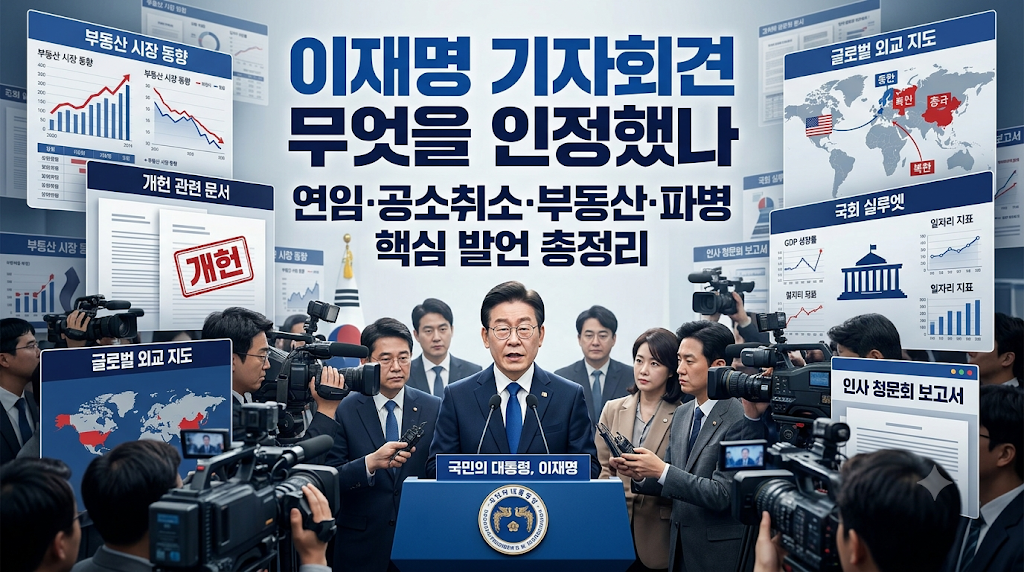
2차 글 범위
이 글은 기자회견에서 확인된 주요 발언만 정리하고 분석한다. 정당, 경제계, 시민사회, 전문가와 온라인 여론에 대한 평가는 포함하지 않았다. 각계 반응과 여론은 충분한 자료가 공개된 뒤 별도의 3차 글에서 다룬다.
이번 기자회견은 흔들린 국정 신뢰를 회복할 출발점이었나, 아니면 후속 결정을 기다려야 하는 설명에 머물렀나?
FACT CHECK|기자회견에서 확인된 발언
이재명 대통령은 국정 지지율 하락의 원인을 여러 현안에 돌리지 않고 자신의 부족함 때문이라고 말했다. 정책 실행과 성과에 집중하는 과정에서 국민이 겪는 어려움과 갈등에 충분히 공감하지 못했다는 취지로 설명했다.
경제 위기 극복과 성장 회복뿐 아니라 국민이 실제 생활에서 체감하는 민생 개선에 더 집중하겠다고 밝혔다. 경제지표의 회복과 국민 개개인의 삶이 달라지는 것은 서로 다른 과제일 수 있다는 점도 언급했다.
자신의 연임은 현행 헌법상 불가능하며 연임할 생각도 전혀 없다고 밝혔다. 개헌은 대통령이 단독으로 추진하는 것이 아니라 국회와 국민이 여야 협의와 의견 수렴을 거쳐 결정할 사안이며, 합의가 이뤄지면 협력하겠다는 입장을 제시했다.
공소취소 문제는 법과 원칙, 순리에 따라 처리하면 된다고 말했다. 관련 논란이 발생하지 않도록 국회 측에 특검 권한 가운데 기소 사건의 처분과 관련된 조항을 삭제해 달라고 요청했다는 설명도 내놨다.
기존 인사 시스템을 통해 노력했지만 부족한 부분이 있었다며 전반적인 재점검 의사를 밝혔다. 김승원 법무부 장관 후보자의 임명 여부에 대해서는 최종 결론을 내리지 못했다고 답했고, 정책실장 인선도 적절한 인물을 찾으며 고심하고 있다고 설명했다.
부동산 시장을 반드시 안정시키겠다는 입장을 밝혔다. 주택 공급 분야의 금융을 최대한 확대하겠다는 방향도 제시했지만, 공개된 주요 발언에서는 구체적인 공급 물량과 대상 지역, 시행 시점이 제시되지 않았다.
전쟁을 위한 파병은 없으며 전쟁 불개입 원칙을 계속 지키겠다고 밝혔다. 군사적 개입 가능성에 일정한 경계선을 제시한 답변이다.
대미 투자 실무 합의안에는 한국이 동의하기 어려운 부분이 있어 다시 협의하고 있다고 밝혔다. 실무선에서 마련된 합의안을 그대로 수용하지 않고 조건을 조정하는 단계라는 설명이다.
북미 협력이 진행되더라도 한국 정부의 역할은 필수적이라며 이른바 ‘남측 패싱’을 우려할 필요가 없다고 말했다.
서울과 세종을 각각 경제와 행정의 중심으로 발전시키는 경제·행정 2수도 시대를 열겠다는 방향을 제시했다.
주가를 정확히 예측하기 어렵다는 점을 언급하면서도 레버리지 ETF 관련 정부 대응에 부족함이 있었던 것 같다고 인정했다.
여기까지가 공식 자료로 확인되는 사실이다.
DETAIL|회견의 전체 흐름은 무엇이었나
이번 회견의 첫 번째 축은 책임 인정이었다. 이 대통령은 지지율 하락을 외부 환경이나 특정 논란 하나의 결과로 한정하지 않았다. 여러 문제가 겹쳤더라도 최종 책임은 대통령 자신에게 있다는 식으로 답했다. 국정 성과를 설명하는 데서 출발하지 않고 국민의 실망을 먼저 인정했다는 점에서 회견의 정서적인 방향은 방어보다 성찰에 가까웠다.
두 번째 축은 정치적 경계선이었다. 연임 의사가 없다고 밝혔고, 전쟁 파병에도 선을 그었다. 공소취소 문제에는 법과 원칙에 따른 처리를 강조했다. 논란을 완전히 끝냈는지는 후속 평가가 필요하지만, 적어도 대통령이 어떤 방향의 답변을 선택했는지는 확인됐다.
세 번째 축은 아직 결론이 나지 않은 정책과 인사였다. 법무부 장관 후보자 임명, 정책실장 인선, 부동산 세부 대책과 대미 투자 협상은 방향만 제시됐거나 협의가 진행 중인 사안으로 남았다. 이 부분은 회견 자체보다 후속 발표가 더 많은 정보를 제공하게 된다.
발언을 세 종류로 나누면 더 선명해진다
확정적 입장에는 연임 의사 부인과 전쟁 불개입 원칙이 들어간다. 정책 방향에는 민생 강화, 부동산 안정, 주택 공급 금융 확대와 서울·세종 2수도 구상이 포함된다. 추가 결정이 필요한 사안에는 인사 문제와 대미 투자 협상, 부동산 세부 계획이 남아 있다.
핵심 쟁점|대통령은 무엇을 인정하고 무엇을 유보했나
책임은 인정했지만 쇄신의 범위는 열어뒀다
지지율 하락을 자신의 부족함으로 돌린 것은 대통령이 정치적 책임을 직접 받아들였다는 뜻이다. 그러나 인적 개편이나 정책 노선 조정의 범위까지 확정한 것은 아니다.
인사 시스템을 재점검하겠다는 말이 실제 후보자 교체와 검증 절차 변화로 이어지는지 확인해야 책임 인정이 국정 쇄신으로 연결됐는지 판단할 수 있다.
연임 논란에는 선을 그었지만 개헌 논의는 열어뒀다
개인의 연임 의사는 명확하게 부인하면서도 개헌 자체를 부정하지는 않았다. 개헌의 주체를 국회와 국민으로 규정하고 합의가 이뤄지면 협력하겠다는 구조다.
이 답변은 대통령 개인의 이해와 제도 개편 논의를 분리하려는 선택으로 읽힌다. 앞으로는 국회의 개헌 논의가 실제로 어떤 내용과 일정으로 진행되는지가 별도의 판단 대상이 된다.
파병에는 명확했고 대미 투자에는 협상 여지를 남겼다
전쟁 파병은 없다는 답변은 외교·안보 분야에서 비교적 명확한 경계선이다. 반면 대미 투자 문제는 동의하기 어려운 부분을 다시 협의하고 있다고 밝혀 최종 합의 가능성과 내용 모두 열어뒀다.
두 답변의 차이는 사안의 성격에서 나온다. 군사 개입에는 원칙을 먼저 제시했고, 경제 협상에는 조건과 국익을 조정할 여지를 남겼다.
부동산 안정 의지는 분명했지만 실행표는 아직 없다
부동산 시장 안정과 주택 공급 금융 확대라는 방향은 제시됐다. 그러나 공급 물량과 지역, 재원, 인허가와 착공 일정이 확인되지 않은 상태에서는 이를 완성된 부동산 대책으로 보기는 어렵다.
부동산 문제는 선언보다 집행 조건이 복잡하다. 금융을 확대하면서 시장 과열을 어떻게 막을 것인지, 공급이 실제 입주로 이어질 때까지 주거 부담을 어떻게 낮출 것인지가 후속 과제로 남는다.
ANALYSIS|이번 회견을 읽는 네 가지 프레임
분석 1. 회견의 중심은 정책 발표가 아니라 신뢰 회복이었다
이번 회견에서 가장 먼저 드러난 것은 새로운 정책의 숫자가 아니라 대통령의 태도 변화였다. 지지율 하락을 자신의 부족함으로 인정하고 민생 체감에 충분히 답하지 못했다고 설명한 것은 국민과 정부 사이의 인식 차이를 받아들이려는 시도였다.
정책 성과가 존재하더라도 국민의 생활이 나아졌다고 느끼지 못하면 국정 평가는 개선되지 않는다. 정부가 제시하는 거시지표와 국민이 체감하는 주거비, 물가, 일자리 사이의 간극이 회견의 배경에 놓여 있다.
IDEA 판단: 대통령은 정책의 정당성을 반복하기보다 국민이 체감하지 못한 이유를 설명하는 쪽으로 방향을 틀었다. 다만 신뢰 회복은 말이 아니라 이후의 정책 우선순위 변화로 확인된다.
분석 2. 연임과 공소취소 답변은 대통령 권한의 경계를 설명하려는 시도였다
연임하지 않겠다는 입장과 공소취소를 법과 원칙에 따라 처리해야 한다는 답변은 대통령 개인의 이해관계와 국가 시스템을 분리하려는 메시지다.
그러나 정치적 논란은 대통령의 발언만으로 끝나지 않는다. 향후 개헌안의 적용 범위, 관련 입법과 정부·여당의 행동이 오늘의 설명과 일치하는지가 제도적 신뢰를 결정한다.
IDEA 판단: 말의 경계선은 제시됐다. 다음 검증 단계는 행정부와 여당의 실제 행동이 그 경계선을 넘지 않는지 확인하는 것이다.
분석 3. 전쟁 불개입과 대미 투자 재협상은 서로 다른 국익 계산을 보여준다
전쟁 파병에 선을 그으면 군사 개입에 따른 인명과 외교적 위험을 줄일 수 있다. 반면 동맹 차원의 역할을 요구하는 목소리와는 긴장이 생길 수 있다.
대미 투자안 재협상은 기업 부담과 산업 정책, 한미 관계를 동시에 고려해야 하는 문제다. 합의를 서두르지 않는 것은 협상력을 유지하는 선택일 수 있지만, 협상이 길어지면 기업의 불확실성도 커질 수 있다.
IDEA 판단: 외교·안보 분야에서는 단순한 친미 또는 반미 구도가 아니라 군사 위험과 경제적 비용을 사안별로 분리해 판단하려는 모습이 나타났다.
분석 4. 가장 어려운 시험은 부동산과 인사에서 시작된다
연임 의사와 파병 원칙은 대통령의 발언으로 입장을 밝힐 수 있다. 하지만 부동산과 인사 문제는 말만으로 결과를 만들 수 없다.
부동산 안정에는 공급, 금융, 세제와 실수요 보호가 함께 작동해야 한다. 인사 쇄신에는 추천과 검증 과정, 최종 임명 판단이 달라져야 한다. 두 분야 모두 후속 조치가 없으면 회견의 책임 인정과 민생 강조가 선언으로 남을 가능성이 있다.
IDEA 판단: 이번 회견의 성패는 연임이나 파병 답변보다 향후 인사 결정과 부동산 세부 대책에서 판가름 날 가능성이 크다.
COUNTER VIEW|이 평가가 틀릴 수 있는 이유
책임 인정 자체가 국정 전환의 출발점일 수 있다
후속 대책이 아직 나오지 않았다는 이유만으로 회견의 의미를 낮게 평가할 필요는 없다는 반론이 가능하다. 대통령이 지지율 하락을 자신의 부족함으로 인정하고 민생 체감의 간극을 언급한 것 자체가 정책 우선순위 변화를 예고한 신호일 수 있다.
즉석에서 세부 정책을 발표하지 않은 것이 신중함일 수 있다
부동산과 대미 투자처럼 이해관계가 복잡한 사안을 기자회견에서 즉시 확정하면 정책 혼선이나 협상력 약화가 생길 수 있다. 방향을 먼저 밝히고 부처 검토와 협의를 거쳐 세부안을 내놓는 방식이 더 안정적이라는 해석도 가능하다.
현재 단계에서는 사회적 반응이 충분히 확인되지 않았다
이 글은 회견의 발언 내용만을 토대로 작성했다. 정당과 경제계, 시민사회, 전문가, 온라인 여론과 조사기관의 평가는 포함하지 않았다. 따라서 회견이 실제로 신뢰 회복에 도움이 됐는지는 아직 판단할 수 없다.
IMPLICATION|회견 이후 확인해야 할 후속 결정
- 인사 시스템: 검증 기준과 추천 절차가 실제로 어떻게 바뀌는가.
- 법무부 장관 후보자: 임명, 철회 또는 추가 검증 가운데 어떤 결론이 나오는가.
- 부동산: 공급 지역과 물량, 금융 지원 대상, 재원과 시행 일정이 발표되는가.
- 대미 투자: 재협상 대상 조항과 최종 합의의 비용·편익이 공개되는가.
- 파병 원칙: 전쟁 불개입 원칙이 실제 외교·안보 결정에서도 유지되는가.
- 개헌: 국회의 논의가 시작될 경우 현직 대통령 적용 문제와 권력구조 개편 내용이 어떻게 정리되는가.
- 민생: 성장 지표와 별도로 국민의 물가·주거·일자리 부담을 낮출 정책이 뒤따르는가.
첫째, 이재명 대통령은 지지율 하락을 자신의 부족함으로 인정하고 민생 체감에 더 집중하겠다고 밝혔다.
둘째, 연임 의사를 부인하고 전쟁 파병에 선을 그었으며, 공소취소는 법과 원칙에 따라 처리해야 한다고 말했다.
셋째, 인사와 부동산, 대미 투자 문제는 방향만 제시됐거나 협의가 진행 중이어서 후속 결정이 필요하다.
결론|경계선은 나왔고 평가는 이제부터다
이번 기자회견에서 이재명 대통령은 국민의 실망을 자신의 부족함으로 받아들이고 민생과 소통을 강화하겠다고 밝혔다. 연임 의사가 없다는 점과 전쟁 파병을 하지 않겠다는 입장도 비교적 명확하게 제시했다. 공소취소 문제에는 법과 원칙을 강조했고, 인사 시스템의 부족함은 재점검하겠다고 말했다.
그러나 회견이 모든 질문에 결론을 내린 것은 아니다. 법무부 장관 후보자의 거취와 정책실장 인선, 부동산 세부 대책, 대미 투자 재협상은 여전히 진행 중이다. 대통령이 책임을 인정한 만큼 후속 결정의 기준도 이전보다 더 엄격하게 평가받게 된다.
IDEA의 결론은 이렇다. 이번 회견은 정치적 논란에 몇 가지 경계선을 긋고 국정의 중심을 민생 체감으로 옮기겠다고 선언한 자리였다. 다만 신뢰 회복의 성공 여부는 오늘의 말이 아니라 앞으로 발표될 인사, 부동산, 대미 투자와 민생 정책에서 확인된다.
출처
이 글은 기자회견에서 확인된 주요 발언을 정리하고 그 구조적 의미를 분석한 콘텐츠다. 정당과 경제계, 시민사회, 전문가 및 여론조사 결과는 반영하지 않았으며 각계 반응과 실제 여론은 별도의 후속 글에서 다룬다.
Scope of this second report
This article covers only the main statements confirmed during the press conference. It does not assess reactions from political parties, business groups, civil society, experts, online communities or opinion polls. Those responses will be examined separately after sufficient evidence becomes available.
Did the press conference begin to restore public trust, or did it leave the most consequential judgments to future personnel and policy decisions?
FACT CHECK|What the President Said
President Lee attributed the decline in public approval to his own shortcomings. He said the administration had not sufficiently understood the difficulties and conflicts experienced by the public while focusing on policy implementation and results.
He pledged to give greater attention to improvements that people can feel in their daily lives, rather than focusing only on economic recovery and growth indicators.
President Lee said re-election was not possible under the current Constitution and that he had no intention of seeking another term. He described constitutional revision as a matter for the National Assembly and the public.
He said the issue should be handled according to law, principle and proper procedure. He also said he had asked the National Assembly to remove a provision concerning the disposition of cases already indicted by a special counsel.
The president acknowledged shortcomings in the personnel system and said it would be reviewed. He had not reached a final decision on Justice Minister nominee Kim Seung-won and said the appointment of a policy chief was still under consideration.
He pledged to stabilise the housing market and expand financing for housing supply. The main statements released at the time did not specify supply volumes, locations or a detailed implementation schedule.
President Lee said there would be no deployment for war and that the principle of non-participation in war would remain in place.
He said parts of a working-level investment agreement were difficult for South Korea to accept and were being renegotiated.
He said the South Korean government would continue to play an essential role in cooperation between the United States and North Korea, dismissing concerns that Seoul could be bypassed.
The president proposed developing Seoul and Sejong as complementary economic and administrative capitals.
This is the extent of the information confirmed through official materials.
DETAIL|The Structure of the Press Conference
The first theme was political responsibility. President Lee did not attribute the decline in approval to one controversy or an external factor. He accepted responsibility and acknowledged a gap between the government’s assessment of its performance and the public’s experience.
The second theme was the definition of political boundaries. He rejected the prospect of seeking another term, ruled out participation in war and placed the withdrawal of charges within a framework of law and principle.
The third theme involved decisions that remain unresolved. Personnel appointments, detailed housing measures and investment negotiations with the United States require further decisions and official announcements.
Three categories of statements
Firm positions included the rejection of re-election and the principle of non-participation in war. Policy direction included stronger attention to livelihoods, housing stability and greater financing for supply. Unresolved matters included personnel appointments, detailed housing measures and the final investment agreement with the United States.
ANALYSIS|Four Ways to Read the Conference
Analysis 1. Restoring trust took priority over announcing policies
The most visible change was the president’s tone. By accepting responsibility for declining approval and acknowledging that the public had not felt sufficient improvement, he recognised a gap between macroeconomic performance and daily experience.
IDEA view: The conference created a possible starting point for restoring trust, but confirmation will require changes in policy priorities and implementation.
Analysis 2. The president attempted to separate personal interests from state authority
The rejection of another term and the emphasis on law and principle in handling criminal proceedings were intended to distinguish personal political interests from the use of presidential power.
IDEA view: The verbal boundary has been stated. The next test is whether the actions of the administration and governing party remain consistent with it.
Analysis 3. Security and economic negotiations involved different calculations
The non-participation principle limits the risks of military involvement, while potentially creating tension with demands for broader alliance contributions. Renegotiating the US investment proposal may protect domestic interests but can also prolong uncertainty for companies.
IDEA view: The administration appeared to separate military risk from economic bargaining rather than treating every alliance issue through one political framework.
Analysis 4. Housing and personnel decisions remain the hardest tests
A president can state a position on re-election or military deployment immediately. Housing stability and personnel reform require detailed plans, revised procedures and visible decisions.
IDEA view: The ultimate assessment may depend more on upcoming personnel decisions and housing measures than on the clearest political statements made during the conference.
COUNTER VIEW|Why This Assessment Could Be Wrong
Accepting responsibility may itself mark a turning point
It may be premature to discount the conference because detailed follow-up measures were not immediately announced. Public acknowledgment of shortcomings could signal a genuine change in policy priorities.
Delaying detailed decisions may reflect caution
Immediate conclusions on housing or international investment could create policy confusion or weaken negotiating leverage. Announcing a direction first and releasing details after further review may prove more stable.
Public reaction has not been assessed here
This article is based only on the content of the press conference. Reactions from political parties, business groups, civil society, experts, online communities and opinion polls are outside its scope.
IMPLICATION|What Should Be Verified Next?
- Personnel: Whether vetting standards and recommendation procedures change.
- Justice Minister nominee: Whether the nomination is approved, withdrawn or reviewed again.
- Housing: Whether locations, volumes, financing and implementation schedules are announced.
- US investment negotiations: Which terms are revised and what costs the final agreement creates.
- Military policy: Whether the non-participation principle is maintained in subsequent decisions.
- Livelihoods: Whether policies addressing housing, prices and employment follow the conference.
First, President Lee accepted responsibility for declining approval and promised greater attention to improvements people can feel.
Second, he rejected another term, ruled out participation in war and placed the withdrawal of charges within a framework of law and principle.
Third, personnel, housing and US investment negotiations remain unresolved and require follow-up decisions.
Conclusion|The Boundaries Were Stated, but the Assessment Begins Now
The press conference acknowledged public disappointment and attempted to reset the administration’s focus toward livelihoods. It also established clearer positions on re-election and military participation.
Yet the most consequential decisions remain ahead. Personnel appointments, housing measures and investment negotiations will determine whether the president’s acknowledgment of responsibility produces a genuine change in governance.
IDEA’s conclusion is that the conference established several political boundaries and promised a stronger focus on everyday economic conditions. Whether it restores trust will depend on the personnel and policy decisions that follow.
Sources
This article summarises and analyses the confirmed content of the press conference. It does not include reactions from political parties, business groups, civil society, experts or opinion polls. Those responses will be addressed separately.
이재명 대통령 기자회견, 무엇을 말하고 어디까지 선을 그을까? / President Lee Jae-myung’s Press Confere
한국어 EnglishIDEA POLITICS · PRESS CONFERENCE PREVIEW이재명 대통령 기자회견, 무엇을 말하고 어디까지 선을 그을까? President Lee Jae-myung’s Press Conference: What Will He Address, and Where Will He Draw the Line?민생·개
www.ideas6926.cloud
2026.09.17-추석 장보기, 전통시장이 정말 8만원 쌀까? 온누리상품권까지 계산해봤다
추석 장보기, 전통시장이 정말 8만원 쌀까? 온누리상품권까지 계산해봤다
추석 장보기, 전통시장이 정말 8만원 쌀까? 온누리상품권까지 계산해봤다가격조사에서는 전통시장이 확실히 저렴했다. 그렇다면 상품권 할인과 환급까지 반영한 실제 장보기 부담은 얼마나 낮
www.ideas6926.cloud


