[심층분석] 다카이치 총리의 도발과 트럼프의 침묵: 중일 외교 위기의 이면
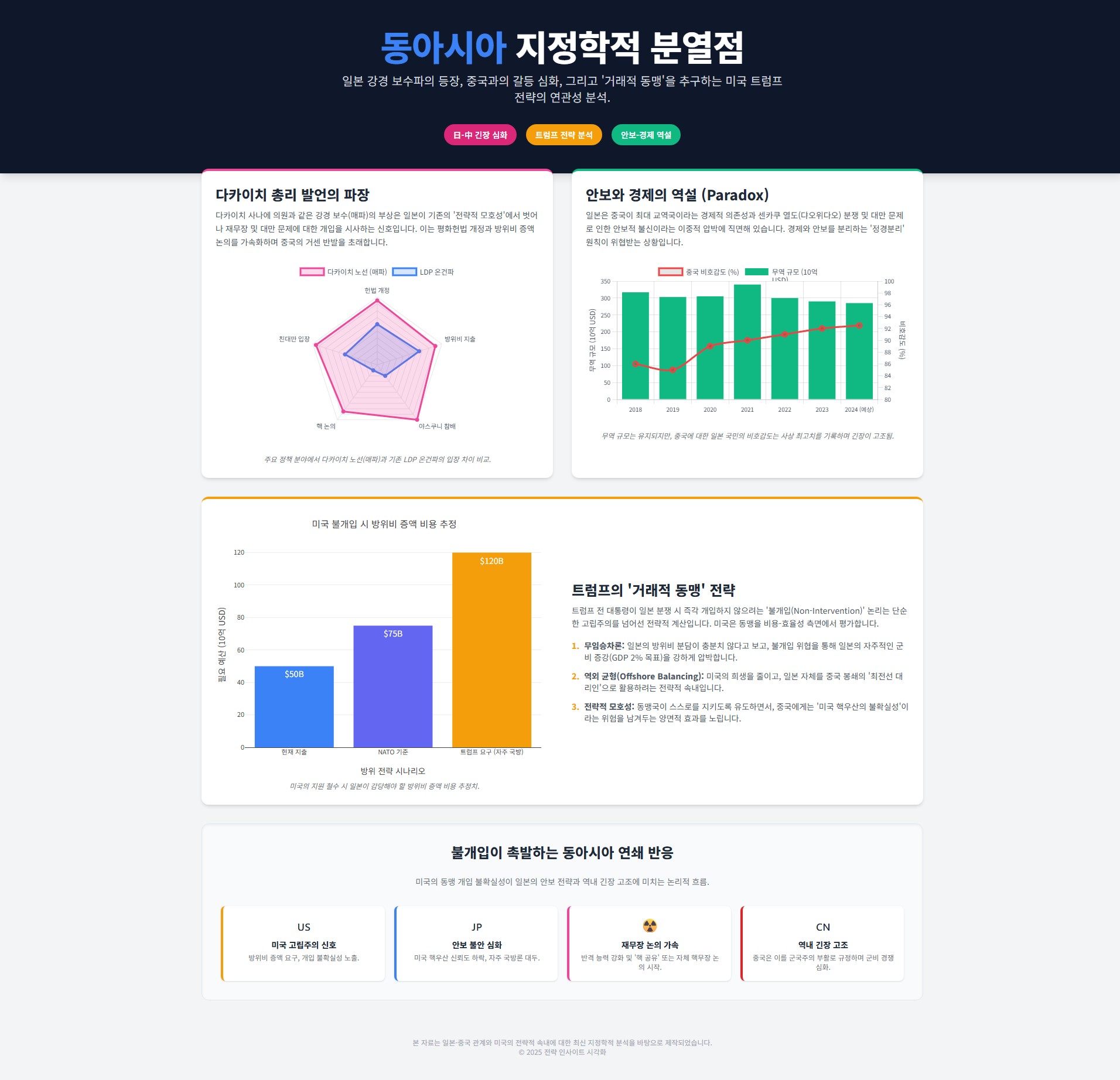
- 다카이치 일본 총리의 "대만 사태는 일본 생존 위협" 발언이 중일 간 외교적 플래시포인트를 촉발했습니다.
- 중국은 해산물 수입 금지, 관광 제한 등 다차원적인 '회색 지대(Gray Zone)' 강압 전략으로 대응했습니다.
- 트럼프 대통령은 일본을 지원하는 대신 '긴장 완화'를 요구하며, 미-중 무역 협상을 우선시하는 거래적 동맹관을 드러냈습니다.
- 일본은 미국의 자동 개입이 없음을 깨닫고 국방비 2% 조기 증액 등 독자적 방위 역량 강화에 속도를 낼 전망입니다.
목차
1. 전략적 모호성의 붕괴: 다카이치 발언의 파장
다카이치 사나에 일본 총리의 발언은 단순한 수사가 아니었습니다. 그녀는 대만 해협의 충돌이 일본에 "생존 위협 사태(survival-threatening situation)"를 초래할 수 있다고 명시했습니다. 이는 일본 외교의 오랜 관행이었던 '전략적 모호성'을 깨고 '전략적 명확성'으로 전환하려는 시도로 해석됩니다.
이 발언은 중국 인민해방군의 군사력 증강에 대응해 억지력을 강화하려는 목적이었으나, 결과적으로 중국의 즉각적인 반발을 불러오며 일본의 '패'를 너무 일찍 드러냈다는 비판도 받고 있습니다.
2. 중국의 보복: 회색 지대 전술과 경제 강압
중국의 대응은 전면전이 아닌, 일본의 취약점을 정교하게 타격하는 '회색 지대(Gray Zone)' 전술이었습니다. 외교적 항의를 넘어 경제, 군사, 문화 등 다방면에서 압박을 가했습니다.
| 영역 | 주요 조치 내용 | 예상 영향 |
|---|---|---|
| 경제/무역 | 일본산 해산물 수입 금지 | 수산업 타격 및 무역 협력 훼손 |
| 관광 | 일본 여행 자제 권고 | 연말까지 최대 12억 달러 손실 예상 |
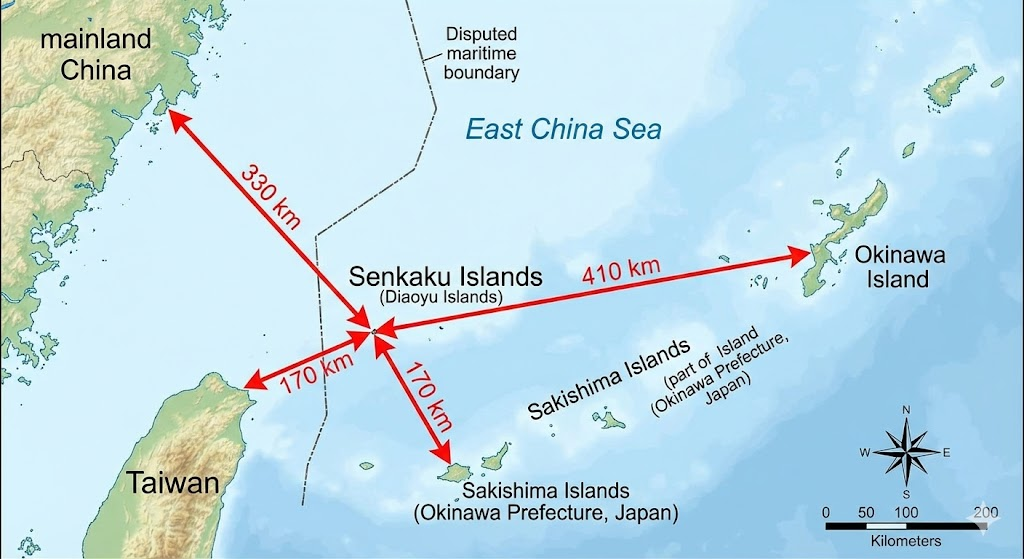
| 군사 | 센카쿠 열도 인근 드론 비행 | 영토 주권 위협 및 군사적 긴장 조성 |
3. 트럼프의 속내: 동맹보다 무역이 우선?
이번 위기에서 가장 주목할 점은 미국의 반응입니다. 도널드 트럼프 대통령은 동맹국인 일본을 공개적으로 지지하는 대신 다카이치 총리에게 "긴장 완화(De-escalation)"를 요청했습니다.
이는 트럼프 행정부의 '미국 우선주의(America First)'와 거래적 동맹관을 명확히 보여줍니다. 시진핑 주석과의 깨지기 쉬운 무역 휴전(Trade War Truce)을 유지하는 것이 일본의 안보 불안을 해소하는 것보다 미국의 단기적 이익에 부합한다고 판단했기 때문입니다.
4. 미일 동맹의 딜레마와 향후 전망
이번 사태는 일본에게 미국의 개입이 '자동적'이지 않다는 냉혹한 현실을 일깨워주었습니다. 미국은 일본이 '전술적 도발 장치(trip-wire)'가 되어 원치 않는 전쟁에 미국을 끌어들이는 것을 경계하고 있습니다.
결국 일본은 미국의 외교적 목표를 존중하면서도, 스스로를 지키기 위해 국방비 GDP 2% 조기 달성과 반격 능력 확보 등 독자적인 억제력을 강화하는 길로 나아갈 것입니다. 미일 동맹은 이제 무조건적인 보호가 아닌, 철저한 이익 계산에 기반한 새로운 국면으로 접어들고 있습니다.
참고 자료 (References)
- Deep Analysis of Sino-Japanese Diplomatic Crisis Report (2025)
- Japanese Ministry of Defense White Paper
- US-China Trade Relations Analysis Data
함께 보면 좋은 글
1,479원 돌파한 원/달러 환율: 트럼프 2.0과 한국 경제의 구조적 위기 (2025년 11월 분석)
트럼프 2.0과 한국 경제의 구조적 위기 (2025년 11월 분석)
www.ideas6926.cloud
미국의 우크라이나 종전 전략 분석: 28개 조항 평화안과 지정학적 함의
28개 조항 평화안과 지정학적 함의
www.ideas6926.cloud
[Deep Dive] PM Takaichi's Provocation & Trump's Silence: The Sino-Japanese Crisis
- PM Takaichi's remark labeling a Taiwan emergency as a "survival-threatening situation" triggered a major diplomatic flashpoint.
- China retaliated with 'Gray Zone' tactics, including seafood bans and military patrols, avoiding full-scale war.
- Instead of backing Japan, Trump urged "De-escalation," prioritizing the fragile US-China trade truce over alliance solidarity.
- Japan realizes US intervention isn't guaranteed and is accelerating independent defense capabilities, including a 2% GDP defense spending hike.
Table of Contents
1. Collapse of Ambiguity: Impact of Takaichi's Remarks
Japanese Prime Minister Sanae Takaichi's statement was not just rhetoric. By explicitly stating that a Taiwan conflict could be a "survival-threatening situation," she attempted to shift Japan's stance from 'Strategic Ambiguity' to 'Strategic Clarity.'
While intended to enhance deterrence against the PLA's buildup, critics argue it revealed Japan's hand too early, provoking immediate backlash from Beijing.
2. China's Retaliation: Gray Zone & Economic Coercion
China's response was a textbook example of 'Gray Zone' tactics—damaging but below the threshold of war. They targeted Japan's vulnerabilities across economic, military, and diplomatic domains.
| Domain | Key Actions | Expected Impact |
|---|---|---|
| Economy | Seafood Import Ban | Damage to fisheries & trade ties |
| Tourism | Travel Restrictions | Est. $1.2B loss by year-end |
| Military | Drone Flights near Senkaku | Testing Japan's resolve |
3. Trump's True Intent: Trade Over Alliance?
The most telling aspect of this crisis was the US response. President Trump urged PM Takaichi to "De-escalate," rather than offering public support.
This reflects the transactional nature of the 'America First' policy. Trump prioritized maintaining the fragile Trade War Truce with Xi Jinping over assuaging Japan's security anxieties.
4. The Alliance Dilemma & Future Outlook
This crisis served as a wake-up call for Japan: US intervention is not 'automatic.' Washington is wary of Japan becoming a 'trip-wire' that drags the US into an unwanted conflict.
Consequently, Japan will likely accelerate its independent defense capabilities, such as achieving the 2% GDP defense spending goal, while managing diplomatic rhetoric. The US-Japan alliance is entering a new phase based on strict calculation of interests.
References
- Deep Analysis of Sino-Japanese Diplomatic Crisis Report (2025)
- Japanese Ministry of Defense White Paper
- US-China Trade Relations Analysis Data
Related Posts
1,479원 돌파한 원/달러 환율: 트럼프 2.0과 한국 경제의 구조적 위기 (2025년 11월 분석)
트럼프 2.0과 한국 경제의 구조적 위기 (2025년 11월 분석)
www.ideas6926.cloud
미국의 우크라이나 종전 전략 분석: 28개 조항 평화안과 지정학적 함의
28개 조항 평화안과 지정학적 함의
www.ideas6926.cloud


