- 디커플링 2.0은 관세보다 강한 ‘기술 통제 + 자원 통제 + 동맹 블록화’로 전개됩니다.
- 한국의 핵심 리스크는 미국 규정 준수(수출통제·보조금 조건)와 중국의 원자재·부품 레버리지(희토류 등)가 동시에 작동한다는 점입니다. (2026년 1월 일본 대상 추가 제한 발생)
- 정답은 감이 아니라 원산지·고객·부품·데이터를 ‘증명 가능한 형태’로 재설계하는 것입니다.
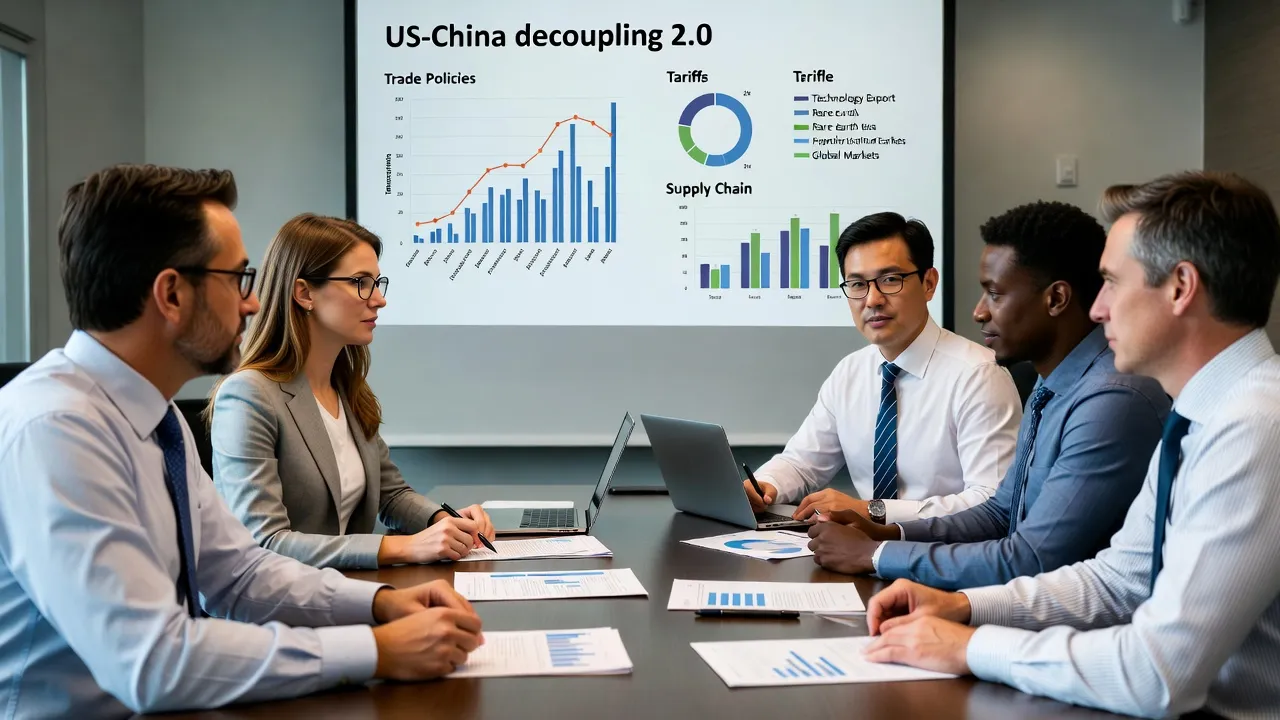
1. 배경: 왜 ‘2.0’인가
과거 1.0이 “관세로 압박 → 협상”의 반복이었다면, 지금 2.0은 기술(수출통제)과 자원(희토류) 그리고 동맹(블록 규정)으로 시장 접근 자체를 바꾸는 방식입니다. 실제로 중국은 희토류 수출 통제를 유지하며 (2025년 11월 일부 1년 정지), 2026년 1월 6일 일본 대상 dual-use 금지(Announcement No.1)를 추가로 발동했습니다. 방산·첨단 반도체 수요처를 겨냥한 라이선스 체계가 강화되고 있습니다. 또한 글로벌 기업의 반도체/AI 공급망은 ‘어디서 만들었는가’보다 누가 설계했고, 어떤 장비·소프트웨어를 썼으며, 어느 고객에게 갔는가가 규제의 핵심 변수가 됐습니다. (미 BIS 2026년 1월 15일 일부 case-by-case 완화에도 구조적 긴장 지속)
2. 핵심 사실: 한국이 바로 맞닥뜨리는 규칙 5가지
| 구분 | 핵심 포인트 | 한국에 의미 |
|---|---|---|
| 기술 통제 | 첨단 반도체·AI 관련 거래는 수출통제/라이선스 리스크가 ‘상수’가 됨 (BIS 2026.1.15 개정: 일부 case-by-case) | 수출 계약서 단계에서 최종사용자·최종용도 확인이 필수 |
| 자원 통제 | 희토류 등 전략 자원은 정책 레버리지로 쓰임 (2026.1.6 일본 대상 금지 추가) | 소재·자석·모터 밸류체인에 조달 다변화 비용이 반영 |
| 관세의 귀환 | 관세는 사라지지 않고, 예외/유예가 기업 실적을 갈라놓음 (트루스 2026.11까지 연장) | “우리 제품은 예외”를 증빙해야 살아남음 |
| 동맹 조건 | 보조금/조달 시장 접근은 현지 투자·원산지 조건과 결합 | 미국 시장은 ‘수출’보다 현지화(생산·조달)로 이동 |
| 시장 신호 | 메모리 업계는 AI 사이클 속에서 기술·정책 리스크가 동시에 가격을 움직임 (SK하이닉스 2026.1.5: HBM 슈퍼사이클 전망) | 한국 대표 기업 실적도 “수요”만이 아니라 규정이 좌우 |
3. 원인 분석: 3개의 엔진이 동시에 돌고 있다
(1) 안보의 경제화
기술과 공급망이 곧 국방력이라는 인식이 커지면서, 정부는 시장에 “허용/금지”의 경계를 긋기 시작했습니다. 이 구도에서는 가격 경쟁력보다 규정 준수 능력이 먼저입니다.
(2) AI 시대의 병목: 전력·칩·자석
AI는 반도체만의 문제가 아닙니다. 데이터센터 전력, 냉각, 변압기, 모터 자석까지 병목이 생깁니다. 따라서 희토류 같은 자원 통제가 강화되면 제조업 전반으로 충격이 확산합니다. (SK하이닉스 2026년 HBM 시장 58% 성장 전망)
(3) 블록화: ‘거래 상대’가 리스크가 된다
기업은 이제 “어디에 팔았는가”가 아니라 “누구와 연결되어 보이는가”가 리스크가 됩니다. 공급망의 일부가 규제 대상이면, 최종 제품도 함께 묶일 수 있습니다.
4. 영향 시나리오: 한국 기업과 투자자의 3가지 길
- A 시나리오(방어 성공): 원산지/부품/고객 데이터가 정리되고, 규정 준수 비용이 ‘고정비’로 흡수 → 미국·우방 시장 점유 확대
- B 시나리오(비용 급등): 대체 조달·이중 재고·법무/컴플라이언스 비용이 급증 → 마진 압박, 가격 전가 실패 기업은 퇴장
- C 시나리오(충격 확산): 자원·부품 통제 강화로 납기 붕괴 → B2B 고객이 ‘공급 안정성’ 기준으로 벤더 재편
5. 실행 체크리스트: 내일 아침부터 바꿀 6가지
- ✔ 원산지 트리: 핵심 부품 20개만이라도 “국가-공정-공급사”로 트리화
- ✔ 최종사용자 확인: 거래처가 재판매하는 구조면 최종사용자 서약서 확보
- ✔ 대체 조달 2원화: 중국/비중국 2개 라인 확보(가격이 아니라 납기·규정 기준)
- ✔ 증빙 패키지: “우리 제품은 규정 위반이 아니다”를 1페이지로 설명하는 문서(감사·바이어용)
- ✔ 현지화 판단: 미국 매출 비중이 커질수록 ‘수출’보다 현지 조달/생산이 유리한 구간이 존재
- ✔ 리스크 가격표: 관세/라이선스/지연 리스크를 ‘원가 항목’으로 넣어 견적을 재작성
참고자료/출처:
1) Reuters: China bans dual-use exports to Japan (2026-01-06)
2) SK hynix: 2026 Market Outlook – HBM-Led Memory Supercycle (2026-01-05)
3) Federal Register: BIS Revision to License Review Policy (2026-01-15)
4) CSIS: China's Rare Earth Campaign Against Japan (2026-01-13)
5) WTO (Trade rules & dispute framework)
- Decoupling 2.0 is unfolding as “tech controls + resource controls + alliance block rules,” often stronger than tariffs.
- Korea’s core risk is that U.S. compliance (export controls/subsidy conditions) and China’s leverage on inputs (rare earths, etc.) can hit at the same time (Japan ban added Jan 2026).
- The answer is not intuition: redesign your supply chain so it is provable in origin, end-user, parts, and data.
1. Background: Why “2.0”
If 1.0 repeated “tariffs → negotiations,” 2.0 changes market access itself through export controls, strategic resources (rare earths), and bloc-style conditions. China maintains rare earth controls (Nov 2025 pause) and added dual-use ban to Japan (Jan 6, 2026 Announcement No.1). Reports indicate licensing frameworks differentiate end users, including advanced semiconductor demand. Meanwhile, in semiconductors and AI supply chains, policy risk is increasingly driven by who designed, what tools were used, and who the final customer is—not just where assembled. (BIS Jan 15, 2026 partial case-by-case easing, but tensions persist)
2. Key Facts: Five Rules Korea Faces Immediately
| Category | Key Point | What it Means for Korea |
|---|---|---|
| Tech Controls | Advanced chips/AI trade includes licenses and compliance (BIS Jan 2026 partial easing) | Contract stage must verify end user & end use |
| Resource Controls | Rare earths used as policy lever (Japan ban Jan 2026) | Diversification costs into magnets/motors/materials |
| Tariff Return | Tariffs persist; exemptions/renewals decide profit (truce to Nov 2026) | “We qualify” must be documented |
| Alliance Conditions | Subsidies/procurement tie to localization and origin rules | U.S. market shifts to local presence |
| Market Signal | Memory/AI cycles moved by demand & policy constraints (SK hynix Jan 2026: HBM supercycle) | Korean leaders face rule-driven volatility |
3. Drivers: Three Engines Running at Once
(1) Securitization of the Economy
As tech and supply chains become national security, markets inherit “allowed/forbidden” boundaries. Compliance comes before price.
(2) AI Bottlenecks: Power, Chips, Magnets
AI is not only chips. Power, cooling, transformers, motor magnets become bottlenecks. Resource controls ripple across manufacturing. (SK hynix 2026 HBM market +58%)
(3) Bloc Risk: Counterparties Become the Risk
Risk is not “where you sold,” but “who you appear connected to.” Restricted node catches final product.
4. Impact Scenarios: Three Paths for Korea
- Scenario A (Defense Works): Clean data; compliance fixed cost → U.S./ally share gains
- Scenario B (Cost Surge): Dual sourcing, overhead squeeze margins → weaker exit
- Scenario C (Shock Spread): Controls break schedules → buyers re-rate by stability
5. Action Checklist: Six Moves Starting Tomorrow Morning
- ✔ Origin Tree: Map top 20 parts by “country–process–supplier”
- ✔ End-User Proof: Secure attestation in resale structures
- ✔ Dual Sourcing: China/non-China lines on lead time & rules
- ✔ Proof Pack: One-page compliance document for auditors/buyers
- ✔ Localization Trigger: Threshold where U.S. favors local sourcing/production
- ✔ Risk Costing: Include tariffs/licensing/delay in quotes
References/Sources:
1) Reuters: China bans dual-use to Japan (2026-01-06)
2) SK hynix 2026 Outlook: HBM Supercycle (2026-01-05)
3) BIS License Revision (2026-01-15)
4) CSIS: China Rare Earth Campaign vs Japan (2026-01-13)
5) WTO Trade Rules
[보고서] 해외 시장 내 한국 브랜드의 국적 오인 및 왜곡 현상 분석과 대응 전략 / [Report] Misidentifi
Read in English (Click) / 한국어로 보기 (클릭)#수출전략 #한국브랜드 #K브랜드 #국적오인 #해외마케팅 #브랜드보호 #중국산모방 #원산지효과 #유통전략 #글로벌비즈니스보고서 개요작성 일자: 2026년 1
www.ideas6926.cloud
현무-5 실전 배치와 동북아 안보 지형의 대격변: 전략적 함의 심층 분석 / Hyunmoo-5 Deployment: A Game Ch
Read in English (Click)#현무5 #한국형3축체계 #동북아안보 #미사일전략 #벙커버스터 #KMPR #국방혁신 #비대칭전력 #안보딜레마 #전략사령부오늘의 심층 리포트 요약세계 최대 8톤 탄두를 장착한 현무-5
www.ideas6926.cloud


