금융 대전환 1부에서 우리는 일본은행(BOJ)의 금리 인상이 어떻게 지난 30년간 세계 경제를 적셔온 '유동성의 수도꼭지'를 잠그는지 확인했습니다. 단순히 이웃 나라의 금리가 오르는 문제가 아닙니다. 2부에서는 이 거대한 해일이 태평양을 건너 미국 월스트리트의 채권 시장을 어떻게 강타하고 있는지, 그리고 한국 경제의 두 기둥인 '수출'과 '주식 시장'에 어떤 엇갈린 운명을 가져오고 있는지 심층적으로 분석합니다.
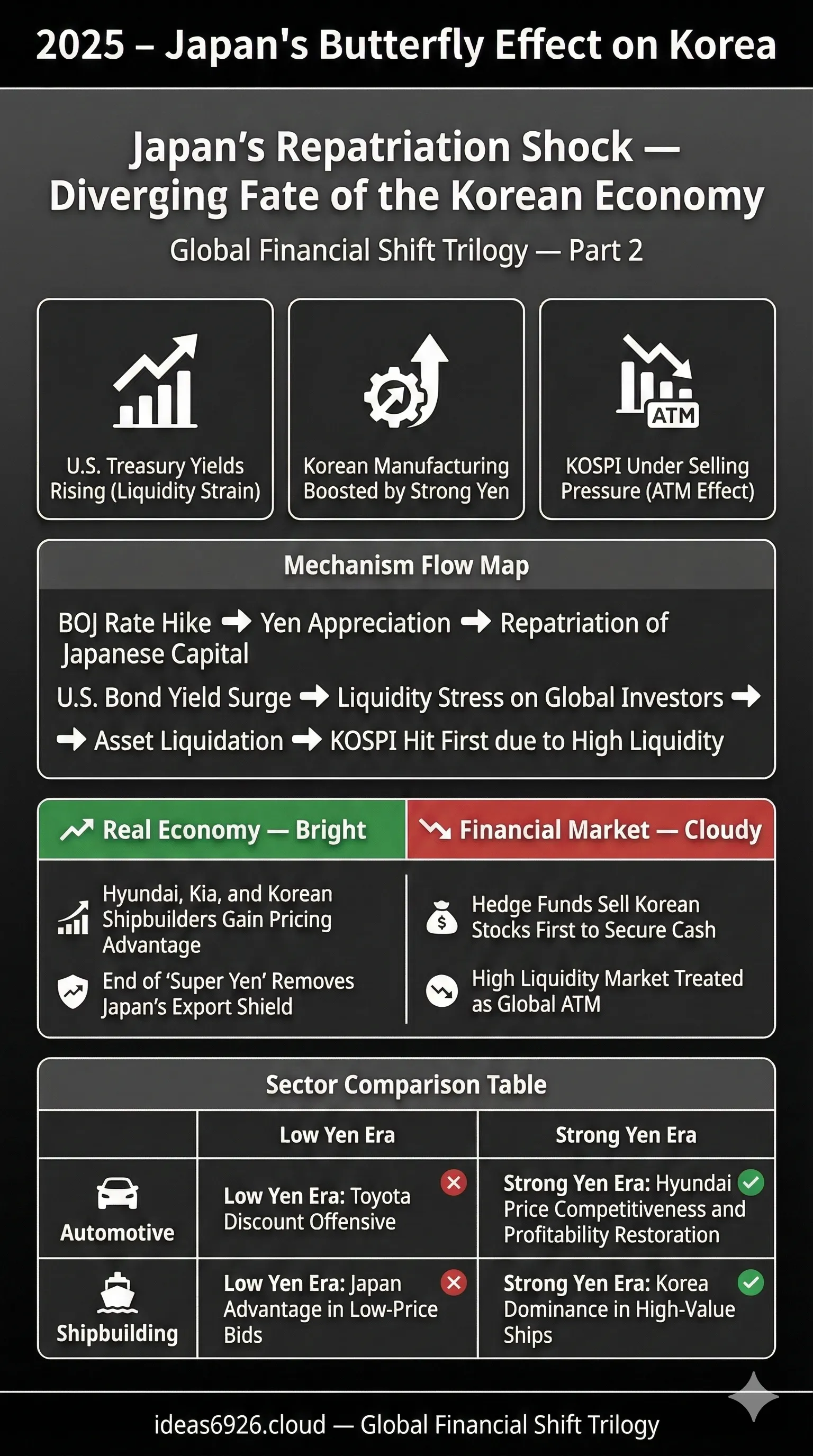
- 미국 시장의 균열: 일본 자금의 본국 송환(Repatriation)은 미국 국채 금리 상승을 유발하여, 모기지 금리와 기업 조달 비용을 압박하고 있습니다.
- 한국 실물 경제 (맑음): '슈퍼 엔저'라는 일본 기업의 방패가 사라졌습니다. 현대차·기아 및 조선 3사는 확실한 가격 경쟁력 우위를 점하게 됩니다.
- 한국 금융 시장 (흐림): 글로벌 자금이 급하게 현금을 확보하는 과정에서, 유동성이 풍부한 한국 증시(KOSPI)가 우선적인 매도 타깃(ATM)이 되고 있습니다.
1. 글로벌 자산 시장: 유동성 파티의 종료
미국 국채, 가장 든든한 매수자가 사라지다
일본은 중국과 더불어 세계 최대의 미국 국채 보유국(약 1.13조 달러 규모)입니다. 그동안 일본 투자자들은 자국 금리가 0%였기에, 환율 위험을 감수하더라도 미국 국채(3~4% 수익)를 매수해 왔습니다. 하지만 일본 10년물 국채 금리가 1.8%를 넘어선 2025년 12월 현재, 상황은 180도 바뀌었습니다.
이제 일본 연기금과 보험사들은 "위험한 해외보다 안전하고 금리도 쏠쏠해진 일본 국채"로 자금을 돌리고 있습니다. 이 거대한 자금 송환(Repatriation) 흐름은 미국 국채 가격 하락(금리 상승)을 부추기고, 이는 곧 미국의 주택 담보 대출(모기지) 금리 상승으로 이어져 미국 소비 경기를 둔화시키는 '중력'으로 작용하고 있습니다.

2. 한국 경제의 빛: 제조업의 르네상스
금융 시장의 불안과 달리, 한국의 공장들은 다시 활기차게 돌아갈 준비를 하고 있습니다. 지난 수년간 한국 수출 기업들을 괴롭혔던 가장 큰 적은 기술 격차가 아니라, '기형적인 엔저'였습니다.
| 구분 | 엔저 시대 (잃어버린 경쟁력) | 엔화 강세 시대 (2026 전망) |
|---|---|---|
| 자동차 (현대 vs 도요타) |
일본 차의 공격적 할인 공세 (영업이익률 압박 심화) |
가격 경쟁력 회복 & 수익성 개선 미국 시장 점유율 확대 기회 |
| 조선업 (한국 vs 일본) |
선가 경쟁에서 일본 우위 저가 수주 출혈 경쟁 |
고부가가치 선박 수주 독점 일본 조선사 입찰가 상승 불가피 |
3. 한국 경제의 그림자: KOSPI는 글로벌 ATM인가?
실물 경제의 호재에도 불구하고, 당분간 주식 시장(KOSPI)은 험난한 파도를 넘어야 합니다. 엔 캐리 청산이 발생할 때, 글로벌 헤지펀드들은 '가장 현금화하기 쉬운 자산'부터 정리합니다. 한국 증시는 개방도가 높고 유동성이 풍부하여, 위기 시마다 현금을 인출해가는 'ATM' 역할을 강요받곤 합니다.
특히 삼성전자, SK하이닉스 등 시가총액 상위 종목들은 기업의 펀더멘털(기초 체력)과 무관하게, 단순히 포트폴리오 비중 조절을 위한 프로그램 매도 물량에 시달릴 수 있습니다.
[금융 대전환 1부] 2025년 12월, '공짜 돈'의 시대가 저물다: BOJ 금리 인상과 엔 캐리 청산의 공포 / [
[특집] 글로벌 금융 대전환 보고서 : 총 3부작 중 제1부 2025년 12월, 세계 경제는 거대한 변곡점 위에 서 있습니다. 일본은행(BOJ)이 12월 금융정책결정회의에서 기준금리 0.75% 인상을 예고하며, 지난
www.ideas6926.cloud
[금융 대전환 3부] 2026년 투자 생존 법칙: "현금을 확보하고 엔화 수혜주를 노려라" / [Financial Shift
[특집] 글로벌 금융 대전환 보고서 : 총 3부작 중 제3부 (완결) 대장정의 마지막입니다. 1부에서 우리는 일본은행(BOJ)의 금리 인상이 왜 시작되었는지 배경을 살폈고, 2부에서는 그 충격파가 한국
www.ideas6926.cloud
In Part 1 of the Great Financial Shift, we confirmed how the Bank of Japan's (BOJ) rate hike is turning off the 'liquidity tap' that has soaked the global economy for the past 30 years. This is not simply a matter of rising interest rates in a neighboring country. In Part 2, we deeply analyze how this massive tsunami crosses the Pacific to hit Wall Street's bond market, and the divergent destinies it brings to the two pillars of the Korean economy: 'Exports' and the 'Stock Market'.
- Cracks in the US Market: The repatriation of Japanese funds triggers a rise in US Treasury yields, putting pressure on mortgage rates and corporate funding costs.
- Korea's Real Economy (Sunny): The shield of Japanese companies called 'Super Yen' has disappeared. Hyundai Motor, Kia, and the 3 major shipbuilders will secure a clear advantage in price competitiveness.
- Korea's Financial Market (Cloudy): In the process of global funds urgently securing cash, the highly liquid Korean stock market (KOSPI) is becoming a primary target for selling (acting as an ATM).
1. Global Asset Markets: The End of the Liquidity Party
US Treasuries: The Most Reliable Buyer Disappears
Japan, along with China, is one of the world's largest holders of US Treasuries (approx. $1.13 trillion). Until now, Japanese investors have bought US Treasuries (3-4% yield) even while taking on currency risk because their domestic interest rates were 0%. However, as of December 2025, with Japan's 10-year government bond yield exceeding 1.8%, the situation has changed 180 degrees.
Now, Japanese pension funds and insurance companies are turning their funds to "Japanese government bonds, which are safer than risky overseas assets and offer decent interest rates." This massive flow of Repatriation is fueling a drop in US Treasury prices (rise in yields), which in turn acts as 'gravity' slowing down the US consumer economy by leading to a rise in US mortgage rates.
2. Light of the Korean Economy: Renaissance of Manufacturing
Contrary to the instability of the financial market, Korean factories are getting ready to run vigorously again. The biggest enemy that has plagued Korean export companies for the past few years was not the technology gap, but the 'Artificially Low Yen'.
| Category | Low Yen Era (Lost Competitiveness) | Strong Yen Era (2026 Outlook) |
|---|---|---|
| Automotive (Hyundai vs Toyota) |
Toyota's aggressive discount offensive (Deepening pressure on operating margins) |
Restored Price Competitiveness & Improved Profitability Opportunity to expand US market share |
| Shipbuilding (Korea vs Japan) |
Japan's advantage in ship price competition Bleeding competition with low-price orders |
Monopoly on high-value ship orders Inevitability of rising bid prices for Japanese shipbuilders |
3. Shadow of the Korean Economy: Is KOSPI a Global ATM?
Despite the good news in the real economy, the stock market (KOSPI) has to cross rough waves for the time being. When Yen Carry Trade unwinding occurs, global hedge funds liquidate the 'easiest assets to cash out' first. The Korean stock market, with its high openness and abundant liquidity, is often forced to play the role of an 'ATM' from which cash is withdrawn during every crisis.
In particular, top market cap stocks like Samsung Electronics and SK Hynix may suffer from programmatic selling volumes simply for portfolio weight adjustment, regardless of the company's fundamentals.


